Essential Features Every Safe Wet Bathroom Should Have
What is a Wet Bathroom?
A wet bathroom, often called a wet room, is a fully waterproof bathroom where the shower area is part of the main bathroom space instead of being enclosed in a separate shower. The floor is gently sloped toward the drain, allowing water to flow away after use.
Unlike a traditional bathroom, where the shower is separate from the rest of the space, a wet room is designed so that the entire floor can get wet. The open layout makes it easier to clean while improving accessibility for people with different mobility needs.
Wet bathrooms are commonly found in hotels, spas, modern homes, healthcare facilities, and places where safety, accessibility, and easy maintenance are top priorities. When designed properly, they offer a practical bathing solution while creating a safer and more comfortable space to bathe.
Why Safety Matters in a Wet Bathroom
A wet bathroom is designed so that the entire floor can get wet during everyday use. The open layout makes the bathroom feel more spacious, but it also means the floor gets wet more often. That’s why choosing the right safety features is so important.
- Slippery floors: If the flooring doesn’t provide enough grip, wet surfaces can get slippery.
- Standing water: If the water doesn’t drain properly, it starts collecting on the floor, increasing the risk of slipping and making the bathroom harder to clean.
- Mold and mildew: Poor ventilation leads to moisture build-up, which creates the ideal situation for mold and mildew over time.
- Poor lighting: A dimly lit bathroom makes it harder to spot wet areas or obstacles, increasing the chance of accidents.
- Accessibility challenges: A poorly designed wet bathroom can make everyday tasks more difficult for people with limited mobility.
- Fall risks for seniors and people with disabilities: Older adults and people with limited mobility are more likely to lose balance and get injured, making safety features more important.
Essential Features Every Safe Wet Bathroom Should Have
No single feature makes a wet bathroom safe. Safety comes from choosing the right combination of flooring, drainage, lighting, and support features.
Slip-Resistant Flooring
The floor is one of the most important safety features in a wet bathroom. Since wet bathroom floors are exposed to water more often than traditional bathrooms, choosing flooring with good grip reduces the risk of slipping and makes the bathroom safer to use every day.
Benefits
- Better grip on wet surfaces
- Reduces slips and falls
- Makes it easier to move around safely
- Easy to clean and maintain
Proper Floor Slope and Efficient Drainage
Even the best flooring can’t help you if water collects on the floor. A properly sloped floor directs excess water toward the drain rather than letting it collect on the surface. This keeps the floor drier and makes the bathroom safer to move around after a shower.
Benefits
- Prevents water from collecting.
- Allows water to drain away quickly.
- Keeps the floor drier after use.
Grab Bars and Support Rails
Wet floors can make it difficult to keep your balance, especially when stepping in or getting out of the shower. Installing grab bars and support rails gives you something sturdy to hold onto during everyday movements. This helps reduce the risk of slips and makes the bathroom easier to move around safely.
Install them near:
- The shower entrance and exit
- The toilet
- The bathroom entrance, where extra support can be useful
- Transfer areas, such as spaces used to move between a wheelchair and a shower seat.
Barrier-Free Shower Design
For people with limited mobility, getting in and out of the shower can be very difficult. A barrier-free shower removes that obstacle and makes it easier to enter and leave the shower safely.
Advantages
- Makes the shower accessible for wheelchair users.
- Allows easier movement in and out of the shower.
- Makes the bathroom easier to use for people of all ages and abilities.
- Reduces the risk of trips and falls.
Adequate Ventilation
A wet bathroom is exposed to more moisture than a regular bathroom, making proper ventilation essential. It removes humid air after a shower, allowing the bathroom to dry more quickly.
Helps reduce
- Humidity.
- Mold and mildew.
- Unpleasant odors.
- Condensation on walls, mirrors, and other surfaces.
Good Lighting
Good lighting makes it easier to move around a wet bathroom safely. It improves visibility, making it easier to spot wet areas, obstacles, and changes in floor level before they become a hazard.
A combination of different lighting types improves visibility throughout the bathroom.
- Ceiling lighting
- Task lighting
- Motion-sensor lighting
- Night lights
Foldable Shower Seats
For many older adults and people with limited mobility, standing throughout a shower can be difficult. A foldable shower seat provides a safe place to sit while bathing, reducing physical strain, making showering safer and more comfortable. The seat can fold against the wall when not in use.
Especially helpful for
- Seniors
- People with disabilities
- People recovering from surgery
- Pregnant women
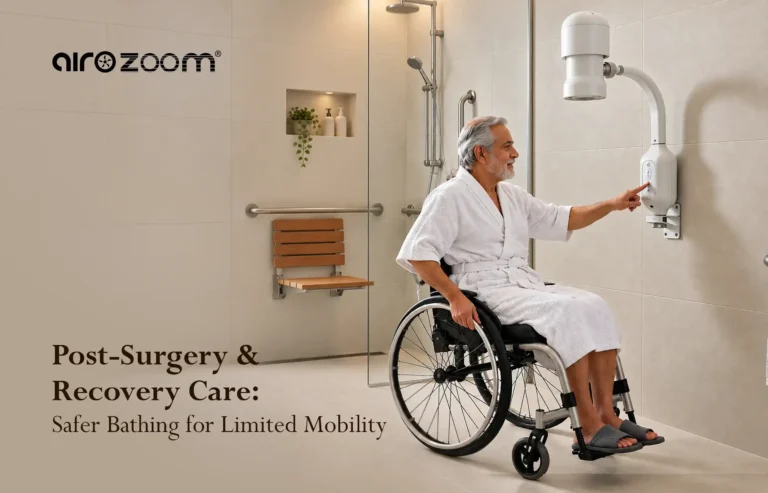
Touch-Free Full Body Dryer
Getting out of the shower doesn’t mean the floor stays dry. As you walk away from the shower, water continues to drip onto the floor. A touch-free full-body dryer helps remove excess moisture before you leave the drying area, reducing the amount of water carried across the floor while also reducing the need for towels during drying.
Benefits
- Dries the body quickly.
- Reduces water dripping onto the floor.
- Supports a more hygienic drying routine.
- Reduces the need for towels during drying.
- Makes independent bathing easier.
Common Mistakes That Make Wet Bathrooms Unsafe
A well-designed wet bathroom can still be unsafe if a few basic details are overlooked. Here are a few common mistakes to avoid:
- Choosing smooth, glossy tiles: They look attractive, but they become slippery when wet and increase the risk of slips and falls.
- Poor drainage: If water doesn’t drain properly, it can collect on the floor and cause slips.
- Not installing grab bars: For older adults and people with limited mobility, getting in and out of the shower can be difficult without something to hold on to.
- Poor lighting: A dim bathroom makes it difficult to spot wet areas or other hazards, increasing the risk of accidents.
- Leaving wet towels on the floor: Wet towels can become trip hazards if left on the floor.
- Poor ventilation: Without proper airflow, moisture builds up over time, encouraging mold, mildew, and unpleasant odors.
- A cluttered bathroom layout: A crowded bathroom leaves less room to move around safely, especially when the floor is wet.
Who Benefits from a Safe Wet Bathroom?
A safe, wet bathroom makes everyday bathing easier for everyone, but for some people it offers more benefits than others. These features can make the biggest difference for:
- Seniors
- People with disabilities
- Wheelchair users
- People recovering from surgery
- Families with young children
- Healthcare facilities
- Hotels and spas
Frequently Asked Questions
What is the point of a wet room?
A wet room makes the bathroom more accessible by removing barriers like a shower tray or cubicle. It creates an open shower space that’s easier to access and easier to clean.
Who is entitled to a wet room?
Wet rooms are suitable for everyone, but they’re especially beneficial for older adults, people with disabilities, wheelchair users, and anyone recovering from surgery.
Is a wet bathroom safe?
Yes. A wet bathroom is safe when it’s designed with features like slip-resistant flooring, proper drainage, grab bars, and good lighting.
How do you prevent slipping in a wet bathroom?
To avoid slips and falls, use slip-resistant flooring, make sure the water drains away properly, install grab bars where needed, and keep the floor free from clutter.
What flooring is best for wet bathrooms?
Slip-resistant flooring is the best choice because it provides better grip when the floor is wet.
Do wet bathrooms require special drainage?
To drain the water properly, wet bathrooms are built with a gently sloping floor so water flows directly into the drain instead of collecting on the floor.
Are wet bathrooms suitable for seniors?
Yes. A well-designed wet bathroom is well-suited for older adults as it removes obstacles and trip hazards, and comes with features like grab bars and foldable shower seats.
Can a full-body dryer improve wet bathroom safety?
A full-body dryer removes excess moisture before you leave the shower area, reducing the amount of water carried across the bathroom floor.
How do you keep a wet bathroom hygienic?
A clean, dry bathroom is easier to maintain. Regular cleaning, good ventilation, and proper drainage reduce moisture, mold, mildew, and unpleasant odors.