Post-Surgery & Recovery Care: Safer Bathing for Limited Mobility
After surgery, even a routine shower can require more effort than expected. Limited mobility, reduced balance, fatigue and discomfort around an incision can make getting in and out of the shower, staying safe, and drying off more difficult. When the bathroom is wet and movement is restricted, parts of your usual routine that once felt effortless may need more planning.
A safer bathing routine starts with understanding these risks and making practical adjustments. From using appropriate bathroom support to choosing a drying method that requires less physical effort, a few changes can make personal care more manageable during recovery. In this blog, we will discuss general safety measures and explain how a touch-free full-body dryer can support the drying stage.
Why Is Bathing a High-Risk Activity During Recovery?
Bathrooms combine several factors that can make falls more likely, particularly when mobility or balance is temporarily reduced after surgery.
A CDC analysis of U.S. emergency-department data from 2008 estimated 234,094 nonfatal, unintentional bathroom injuries among people aged 15 and older. Falls accounted for 81.1% of those injuries, while bathing, showering or getting out of the tub or shower were among the activities most commonly associated with injury. The study also found that approximately two-thirds of bathroom injuries occurred in or around the tub or shower.
During recovery, several factors can add to this risk:
- Reduced balance: Pain, weakness or temporary changes in mobility can make standing, turning and transferring more difficult.
- Incision sensitivity: An incision can be uncomfortable or tender, making certain movements, bending or reaching harder.
- Wet or slippery surfaces: Water on shower floors, tubs and bathroom floors can reduce traction.
- Fatigue from limited mobility: Recovery can make routine activities more tiring, and fatigue can affect steadiness and coordination.
This does not mean bathing is inherently unsafe after surgery. It means the routine may need to be adapted to the individual’s procedure, mobility and medical instructions.
What General Guidance Can Make Bathing Safer After Surgery?
There is no single bathing routine that applies to everyone after surgery. Your surgeon or healthcare team should determine when you can shower and how your incision should be protected.
For general fall prevention, guidance from the CDC and National Institute on Aging includes practical bathroom modifications such as installing grab bars and using nonslip surfaces.
Depending on your mobility and your healthcare provider’s advice, useful measures can include:
- Use grab bars: Properly installed grab bars can provide support when entering or leaving a shower or tub and when moving around the bathroom.
- Improve traction: Nonslip mats or strips can help address slippery surfaces in areas that become wet.
- Consider a shower chair: If standing for the duration of a shower is difficult, ask your healthcare provider or physical therapist whether seated bathing is appropriate for you.
- Keep essentials within reach: Arrange soap, toiletries and other necessary items where they are easy to access without unnecessary movement.
- Get assistance when needed: If your healthcare team advises against bathing alone, have a caregiver or another trusted person available to assist.
- Follow your wound-care instructions: Showering, bathing, dressing care and drying instructions can vary according to the procedure and incision. MedlinePlus advises following the surgeon’s instructions about when bathing is permitted and how the wound should be handled.
Importantly, do not use a general timeframe as a substitute for your surgeon’s instructions. Different procedures, wounds and patients require different precautions.
What Are the Common Bathing Hazards After Surgery?
The risks do not stop once the shower begins. Transfers, reaching and drying can also require balance and physical effort. The following are some of the common hazards after surgery:
- Getting In and Out of the Shower
Stepping over a tub edge or moving between wet and dry surfaces can be challenging when strength or balance is temporarily reduced. CDC guidance specifically recommends grab bars inside and outside the tub or shower where support is needed.
- Standing for Too Long
A person recovering from surgery may find prolonged standing tiring. If standing is difficult, ask your healthcare provider whether a shower chair or another seated bathing arrangement is suitable.
- Bending and Reaching
Reaching for a towel, toiletries, or clothing can require movements that are uncomfortable or difficult after certain procedures. Keeping frequently used items within easy reach can reduce unnecessary movement.
- Drying the Body
Drying can involve repeated bending, twisting, and reaching behind the body. For someone with limited mobility, this can make the period immediately after showering another part of the routine that requires attention.
- Wet Bathroom Floors
Water left on the floor outside the shower can create an additional slipping hazard. NIA recommends nonskid mats or strips on surfaces that may become wet and advises against walking on slippery floors.
What Practical Adjustments Can Make Bathing Safer?
Small changes to the bathroom and the way the routine is carried out can simplify daily tasks and make bathing more manageable during recovery.
Consider the following adjustments for safer bathing:
- Prepare before entering the shower: Have your clothing, toiletries and other essentials ready so you do not need to move around unnecessarily afterwards.
- Use appropriate support: Follow your healthcare provider’s advice about grab bars, shower chairs or other mobility aids.
- Keep the floor as dry as possible: Address water outside the shower promptly and use suitable nonslip surfaces where appropriate.
- Avoid unnecessary bending and twisting: Position commonly used items within comfortable reach.
- Take your time when changing positions: Getting up, sitting down and moving between surfaces can require extra care when mobility is temporarily limited.
- Have assistance when recommended: If you have been advised not to bathe alone, arrange help rather than attempting the routine independently.
- Plan how you will dry yourself: Choose a method that matches your mobility and does not require more physical effort than you can comfortably manage.
The goal is not to make every bathroom modification at once. It is to identify the parts of your bathing routine that currently require the most balance, strength or movement and adapt those steps appropriately.
How Can a Touch-Free Full Body Dryer Support Safer Recovery Routines?
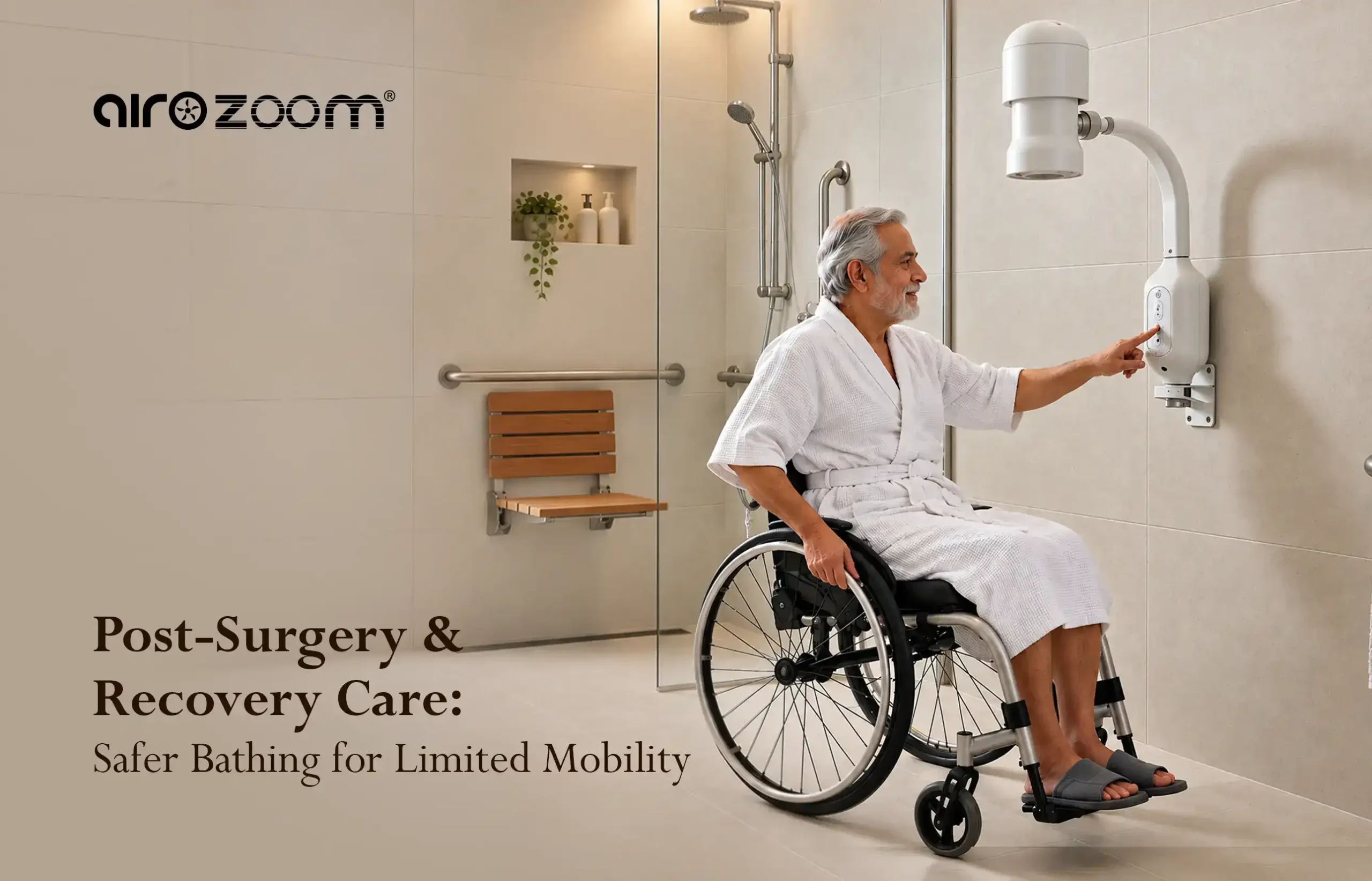
A touch-free full-body dryer dries the body with directed airflow, so you don’t have to towel-dry each area by hand. Airozoom is built for this, offering an alternative to towel drying when movement is difficult. The same approach is used in healthcare settings such as hospitals, where it reduces manual drying effort for patients with limited mobility.
It can support a more manageable drying routine by:
- Reducing bending and reaching: Directed airflow can help dry areas that may be difficult to towel-dry manually, reducing the need for repeated effort.
- Supporting hands-free drying: Users do not need to hold and move a towel around the body, which can be useful when movement is restricted.
- Allowing seated drying: Airozoom can be adjusted for seated drying, offering an option for people who need to minimize standing during the drying stage.
- Reducing physical effort: Instead of manually drying the body section by section, users can rely on airflow to complete the drying process.
For someone recovering from surgery, reducing unnecessary movement can make everyday routines easier to manage. Airozoom can therefore be considered as part of a recovery-friendly bathroom setup, particularly when bending, reaching or prolonged standing makes conventional towel drying difficult.
Frequently Asked Questions
- Is it safe to shower after surgery?
Whether you can shower after surgery depends on the procedure, incision and instructions from your surgeon or healthcare provider. Follow their guidance on when you can shower, whether the incision needs to be kept dry or covered, and how it should be cared for. Avoid relying on a general recovery timeline, as bathing instructions can vary from person to person.
- What is the safest way to dry off with limited mobility?
The safest drying method depends on your mobility, the type of surgery and your healthcare provider’s instructions. If towel drying requires uncomfortable bending, twisting or reaching, a touch-free full-body dryer can provide an alternative by using airflow instead of manual towel drying. If you have a surgical incision, follow your healthcare provider’s instructions for drying the area specifically.
- Can a full-body dryer be used while seated?
Yes, a full-body dryer designed for seated use can allow drying while sitting, which can be useful for people who have difficulty standing for extended periods. Airozoom can be positioned for seated drying, but the seating arrangement and use of the dryer should still be appropriate for your individual mobility needs and any post-surgery restrictions.
- How do I reduce fall risk in the bathroom during recovery?
Reduce fall hazards by keeping floors dry and clear, using appropriate non-slip surfaces, installing properly positioned grab bars and considering a shower chair if recommended by your healthcare provider or physical therapist. Keep essential items nearby, take care when changing positions and arrange assistance if you have been advised not to bathe alone.
- Should I ask my doctor before changing my bathing routine post-surgery?
Yes. Your surgeon or healthcare provider should guide decisions about when you can shower or bathe, how your incision should be managed and whether you need assistance or specific equipment. Before changing your routine, ask about anything that could affect your recovery, particularly if you are considering seated bathing, mobility aids or a different way of drying.