Common Mistakes to Avoid When Using a Full Body Dryer
A full-body dryer is one of those things that sounds almost too simple to get wrong. You step in, the air does its job, and you’re done. But like any piece of tech in your home or facility, how you use it actually matters more than most people think.
Most people set up a full-body dryer and expect it to handle the rest. And for the most part, it does.
But a few small habits or oversights can get in the way of a clean, comfortable drying routine, and sometimes even shorten the life of the unit itself.
This blog walks through the most common mistakes people make when using a full-body dryer, so you can skip the trial and error and get the most out of it right from day one.
Mistake 1: Not Standing in the Right Position
A full-body dryer can only dry you properly if the airflow reaches all parts of your body. Standing in the wrong position is one of the most common reasons people do not get the best results.
The Mistake
Standing too close or too far from the dryer, or staying in the same position for the entire drying session.
Consequence
Some parts of your body may still be damp, especially your back, underarms, legs, and areas behind your knees. This can make it seem like the dryer is not working well, even though the real issue is how you position your body.
Correct Approach
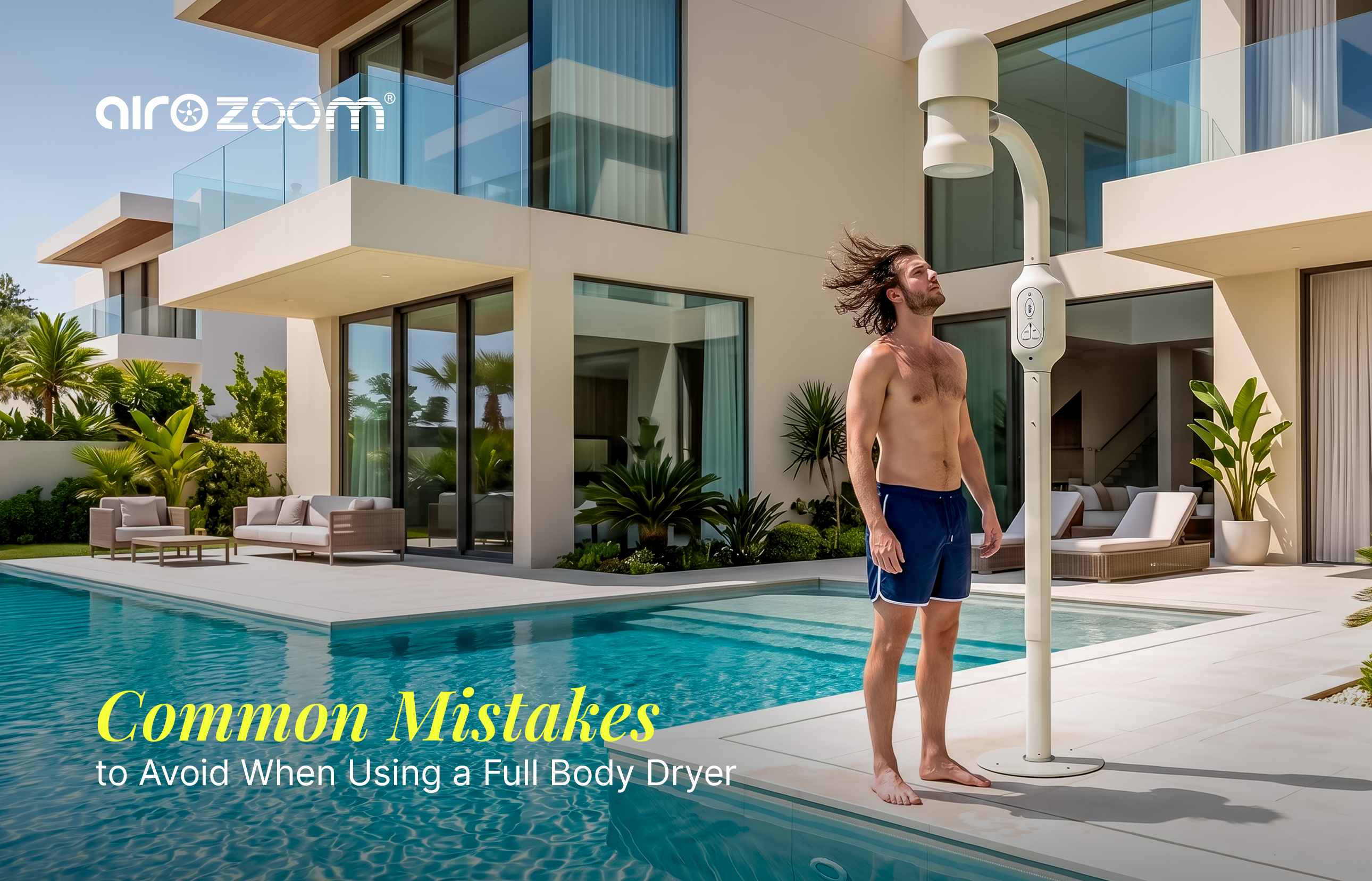
Stand at the distance recommended by the manufacturer and slowly turn during the drying cycle. This helps the airflow reach all areas of your body for a faster and more even drying experience.
Mistake 2: Rushing the Drying Session
Many users leave the dryer too soon, expecting to be completely dry in just a few seconds. While the skin may dry quickly, some areas, especially the hair, need a little more time.
The Mistake
Ending the drying session very early, before the dryer has completed its full cycle.
Consequence
Moisture can remain on the skin and in the hair. This is especially common for people with long or thick hair, making it seem like the dryer is not working properly.
Correct Approach
Allow the full drying cycle to finish for the best results. Stay in position until the airflow stops and give extra attention to your hair, as it usually takes longer to dry than the rest of the body.
Mistake 3: Poor Installation and Placement
Sometimes the problem has nothing to do with how the dryer is being used. If it hasn’t been set up correctly from the start, even a high-performance unit will struggle to do its job as intended.
The Mistake
Installing the dryer at the wrong height, pushing it into a tight corner with limited airflow, or not following the recommended electrical setup.
Consequence
When airflow is restricted, the dryer can’t cover the body evenly. Drying takes longer, results feel inconsistent, and in commercial settings, the strain of working harder than it should leads to maintenance issues and reduced efficiency over time.
Correct Approach
Follow the manufacturer’s guidelines for height, spacing, and airflow clearance. The process is straightforward, but following the guidelines closely ensures the best results. Getting it right during installation means you won’t be troubleshooting performance issues down the line. For commercial facilities, Airozoom’s specialist team can help make sure the unit is positioned correctly and working as it should from day one.
Mistake 4: Skipping Regular Cleaning and Maintenance
A full-body dryer does its job quietly in the background, which makes it easy to forget it needs regular maintenance. But like anything that runs regularly, it performs best when it’s kept clean.
The Mistake
Leaving the vents and filters uncleaned and putting off basic maintenance for longer than you should.
Consequence
Dust and dirt build up over time and start restricting airflow. Drying slows down, performance drops, and the dryer ends up working harder than it needs to, which adds wear over time.
Correct Approach
Give it a quick cleaning on a regular schedule and follow the maintenance steps in the user manual. It doesn’t take much, but staying on top of it keeps the airflow strong and the dryer running the way it should.
Mistake 5: Blocking the Airflow Without Realizing
This one catches a lot of people off guard. Small things, like how you’re standing or what’s nearby, can also get in the way of the airflow without you noticing.
The Mistake
Standing with your arms pressed close to your body, leaving a towel hanging nearby, or wearing accessories that interrupt the airflow.
Consequence
When airflow gets blocked, certain areas don’t dry properly. Underarms, hands, and other tricky spots can stay damp even after the cycle has finished.
Correct Approach
Stand comfortably with your arms slightly away from your body and take off any loose accessories before you step in. Keep towels and clothing away from the unit so the air can move freely and reach everywhere it needs to.
Mistake 6: Not Adjusting for Elderly or Mobility-Limited Users
One of the strongest cases for a full-body dryer is how much easier it makes drying for people with limited mobility. But that benefit only comes through if the setup actually works for them. According to the World Health Organization, more than 2.5 billion people worldwide need one or more assistive products.
The Mistake
Using the same setup for every user without thinking about the needs of wheelchair users, elderly users, or anyone who finds standing and moving around difficult.
Consequence
The drying experience becomes uncomfortable or awkward, and some users end up going back to towels. That means losing out on the independence and ease that a full-body dryer is meant to provide in the first place.
Correct Approach
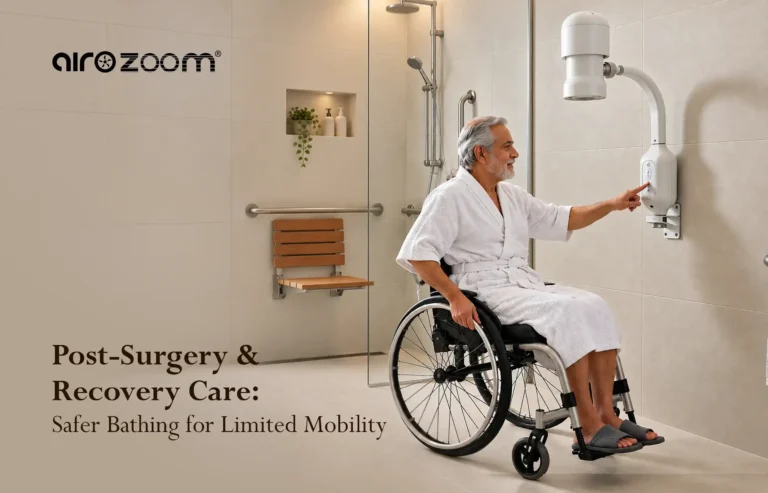
Make sure the dryer is installed at a height that works comfortably for both seated and standing users. Airozoom units can be used comfortably from a wheelchair without the need to bend or stretch. For elderly users, a little extra time and a setup that doesn’t demand too much physically can turn the whole experience from frustrating to genuinely easy.
Mistake 7: Forgetting That Commercial Units Need More Maintenance
A full-body dryer in a gym, spa, or pool area has a very different life from one sitting in a home bathroom. It’s being used by a lot of people, all day long, and that adds up quickly.
The Mistake
Treating it like a home unit and following the same light cleaning routine, even when it’s running nonstop in a busy facility.
Consequence
Dust builds up faster, filters wear out sooner, and drying performance starts to slip. Left unchecked, it becomes harder to keep the unit clean, hygienic, and working the way it should.
Correct Approach
Set a proper maintenance schedule and stick to it. In high-traffic spaces, weekly checks make a real difference. If you’re managing dryers across a commercial facility, Airozoom can help you figure out the right maintenance routine so things don’t quietly go wrong over time.
Mistake 8: Not Understanding the Smart Features
Modern full-body dryers are smarter than they look. Touchless controls, built-in sensors, multiple drying modes. There’s more going on than just an on and off switch, and not knowing that can work against you.
The Mistake
Trying to manually control a dryer that’s already set to run automatically, or ignoring the temperature and mode settings altogether.
Consequence
You end up cutting the cycle short without realising it, which means uneven drying and a dryer that feels like it’s underperforming. It’s not the machine — it’s just not being used the right way.
Correct Approach
Before you use it for the first time, take a few minutes to understand how it actually works. Does it use sensors? Touchless activation? Manual controls? If there are different temperatures or drying modes, try them out. A small amount of time upfront saves a lot of frustration later.
What Sets Airozoom Apart?
- Patented Technology
Designed with exclusive airflow technology for better drying performance.
- 360° Full Coverage
Dries your body evenly from all directions.
- Touch-Free Operation
Starts automatically for a cleaner and hands-free experience.
- Precision Engineering
Made with high-quality materials for long-lasting use.
- Performance Tested
Tested for reliable, safe, and fast drying.
Conclusion
A full-body dryer changes how you dry off after a shower. Most of the issues people run into are caused by simple mistakes that are easy to fix. Pay attention to positioning, let the full drying cycle finish, and keep the unit clean. Small adjustments like these go a long way, whether you’re using a full-body dryer at home, in a gym, a spa, or a care facility.
Airozoom full-body dryers use patented technology, provide full-body coverage, and are built from premium materials with rigorous testing behind each unit. They are touchless, fast, and built to last.