Eczema, Psoriasis, and the Case for Gentler Drying Methods
For the majority of people, taking a shower is quite a simple activity. All that is required is to rinse, scrub, and dry off. However, for someone that suffers from the conditions of eczema or psoriasis, taking a shower becomes a different matter altogether. The skin feels itchy, it stings, and uncomfortable tightness is experienced.
People tend to blame the water or soap and hardly ever think about the towel they use. Nevertheless, rubbing already irritated skin can magnify the problem. Therefore, we need to pay attention to the way we dry ourselves as much as to the way we take a shower. Our guide to drying your body properly is a good place to start.
How Eczema and Psoriasis Affect the Skin
Eczema and a Weakened Skin Barrier
People who have undergone the effects of an eczema flare-up know well how unpredictable the skin can be. One day it may seem manageable, other days even the mere contact of clothing with the affected area may be unbearable. Eczema breaks the skin barrier making it difficult for it to keep itself hydrated. Therefore, dryness, itching, and irritation are usually present.
This is where small habits matter. Rubbing with a towel might seem harmless, but sensitive skin may not tolerate it as well as healthy skin.
Psoriasis and Irritated Skin
Psoriasis can cause thick, scaly patches on the skin, which may be itchy, painful, or sensitive to touch. The symptoms can vary from person to person and depend on the type of psoriasis. While plaque psoriasis typically causes dry, scaly patches, inverse psoriasis can affect skin folds, where moisture and friction may cause additional irritation.
This distinction is important when selecting a drying technique. A person with minor skin dryness may have no issues with using a towel, while an individual with painful spots may avoid directly using the towel.
Why Drying Can Be Uncomfortable for Irritated Skin
Here is a common scenario: step out of the shower, grab a towel, and wipe yourself dry. This would be a straightforward task that you have done countless times.
Now let’s consider what it would be like to dry off when your skin is irritated and dry: you can be pulling at dry skin scales and causing friction by rubbing the towel too aggressively. Even the pressure of drying the wet areas can be painful when inflammation is present.
When drying off, be sure to avoid scrubbing the skin dry. Gently patting the excess moisture away is good enough for making your skincare process smoother.
What Does Gentler Drying Look Like?
It is possible to accomplish the transition without difficulty. For those who are accustomed to using a towel to dry their skin, it may be best to consider exposing pure water to a soft towel. After all, the towel is able to suck up a significant amount of moisture without requiring any movements back and forth.
Make sure to be extra careful when working with problematic surfaces. If a certain area feels hurt, avoid brushing over it with the fabric. Pay attention to skin folds where moisture may accumulate during application, but avoid vigorous rubbing, as it may be harmful.
After that, follow the skincare routine prescribed to you. Make sure to moisturize within a few minutes of showering if you suffer from eczema or psoriasis, but remember that each individual requires different approaches.
Could Touch-Free Drying Be a Gentler Alternative?
What if you could dry your body without a towel touching your skin?
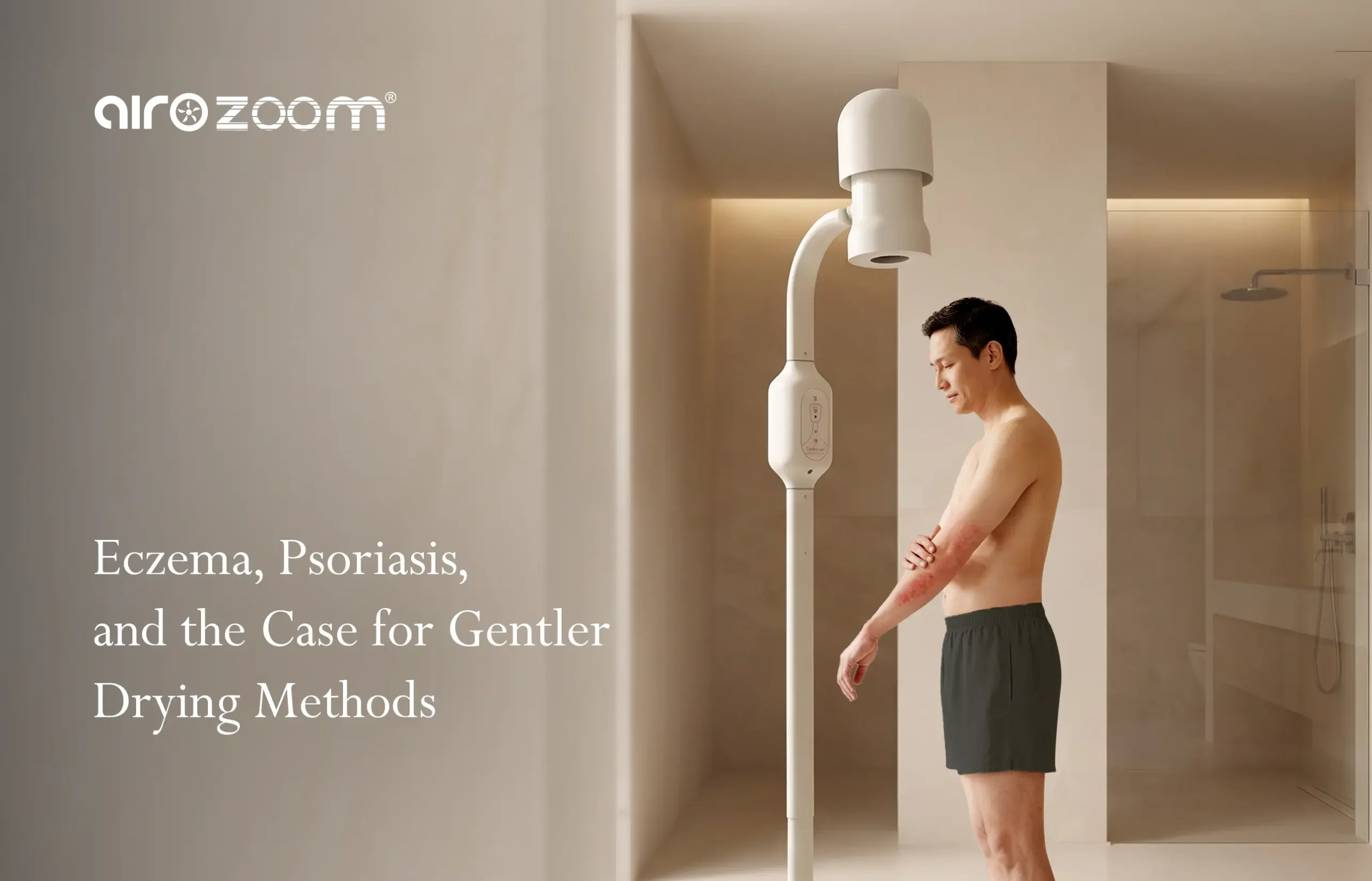
Touch-free drying uses forced air to remove water without friction, which allows water to evaporate naturally, while body dryers facilitate the drying process through the use of air. Similar to air drying, neither technique involves the physical motion of rubbing that is common in the traditional towel drying method.
A solution worth considering is the Airozoom touch-free body dryer, which also uses the benefits of air drying in the place of rubbing with a towel.
However, it is important to keep in mind that while using a different drying method does not get rid of eczema or psoriasis, we cannot claim that it will help prevent any flare-ups either.
When to Be Extra Careful After Bathing
A person’s skin is subject to rapid changes. In conditions like eczema, the simplest touch can turn painful; it is simply unbearable to touch the skin with a serious flare of psoriasis.
Should there be any bleeding or damaged skin, do not rub it, and contact your healthcare provider right away. It may not be a great idea to apply heat directly to the damaged skin.
Your dermatologist can provide some recommendations for post-bathing activities for making your skin better. It does not matter whether you need to use a cream, do any medical procedures, or anything else, follow the instructions given by your doctor.
Building a Skin-Friendly Post-Bathing Routine
The best way to make sure that everything would go well and smoothly is by preparing everything beforehand. Above all, you want to keep the water lukewarm rather than hot. and that you cleanse your skin properly. Some people tend to become very dry after taking a shower that lasts several hours, that is why it would be advisable to monitor the condition of your skin after you take a shower.
Depending on how you feel after your shower, you will decide the best way to dry your skin. If you are up to using a traditional way of drying, just remember to pay attention to how you handle the towel. If you do not mind drying up the skin without coming into contact with it, there are other options available too.
A Gentler Approach to Drying Sensitive Skin
Having eczema or psoriasis means having to rethink everyday habits that others take for granted, such as the process of drying. Some people use a towel to completely dry off their skin before dressing, while others choose a method that is less direct.
Drying without contact with the skin is one possible solution, but it does not mean that it is a cure.
It is of utmost significance to adopt a method of drying that is effective and comfortable.