Arthritis and Everyday Bathing: Small Changes That Reduce Joint Strain

For many people, showering is an automatic task, but for someone suffering from arthritis, even a few minutes spent in the bathroom can be painful. Activities such as turning on the tap, reaching for the shampoo, bending down to wash one’s feet, or drying off with a towel can put pressure on already sensitive joints. However, you may not need to invest in major changes. Sometimes, moving a few things around or finding easier ways to do certain tasks makes bathing less exhausting.
Why Bathing Can Be Difficult With Arthritis
Arthritis affects people differently. Some struggle with stiff fingers, while others find it painful to bend their knees, lift their arms, or stand for long periods.
These problems can show up in unexpected places during a shower. A shampoo bottle that’s difficult to open, for instance, can become a daily frustration when your fingers hurt. Washing your lower legs may be uncomfortable if your hips or knees don’t bend easily. Even holding a towel firmly can be a problem when your hands are stiff.
The challenge isn’t always the bathing itself. It’s the series of movements involved in getting clean and drying off afterwards.
Bathing Tasks That Can Put Extra Strain on Joints
Getting In and Out of the Shower
Getting in and out of the shower takes balance and flexibility. It is challenging when taking decisive steps because knee and hip pain makes it hard to lift your legs and shift your weight.
Appropriately placed grab bars can make the process of showering easier. For those who find it hard to stand during showering, a chair may be an option. What would work best in your case depends on the layout of your bathroom and your mobility level.
Washing and Reaching
When washing the back of the body and lower legs, it is often necessary to stretch or bend the arms. This can be difficult when arthritis affects the shoulders, spine, hips, or hands.
Using a long-handled sponge can help wash difficult-to-reach body parts, while having soap and shampoo nearby will allow you to avoid stretching in the shower.
Handling Towels After Bathing
The fight continues after you get out of the shower. Now you need to dry off your skin, i.e. raise your arms, strain your back or bend down to dry your feet. People with pain in their fingers may find it hard to hold a towel. Those who have sore necks may also suffer from problems with drying off the upper torso. This stage of the process requires more effort than one may think.
Small Bathroom Changes That Can Make Bathing Easier
You don’t need to redesign your bathroom to make it easier to use. Start with the things that cause the most trouble.
- Fit grab bars where needed – Properly installed bars can help with balance and changes in position. Don’t rely on towel rails for support.
- Consider a shower seat – Sitting down can reduce the strain of standing throughout a bath.
- Move everyday products closer – Shampoo, soap, and other essentials should be easy to reach without bending or stretching.
- Look for easier-to-use accessories – Pump bottles and lever-style taps may be more comfortable for stiff or painful hands.
- Check the floor – Non-slip bath mats and appropriate non-slip flooring can also minimize the danger of slipping
- Keep the space clear – A clutter-free bathroom makes it easier to move around, especially when balance is a concern.
If you are hesitant about how to modify your bathroom for safety, consider consulting an occupational therapist for a personalized evaluation.
Rethinking the Drying Step
When we think about the challenges of bathing, we might forget about towel drying. However, towel drying involves many movements which can cause discomfort in those suffering from arthritis.
Arm lifting, stretching the arms behind the body, as well as bending to reach the feet are some of the actions involved in towel drying. If one has a pain in the shoulder or the hand, these actions can be turned into very painful.
It is crucial to use a softer towel or sit down while towel drying. Having the towel close at hand will eliminate the need to reach for it. If holding and moving the towel is hard, it is advisable to think of other methods of towel drying.
Could Touch-Free Drying Reduce Joint Strain?
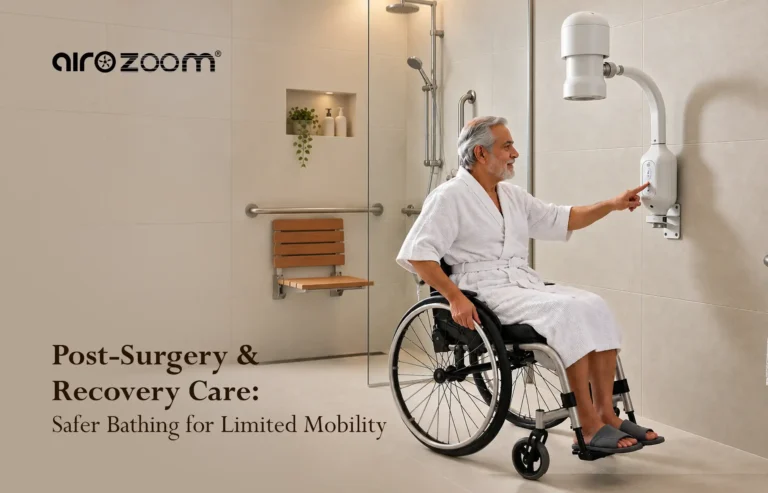
A touchless body dryer will dry your body using airflow rather than using a towel. This enables one of the steps of your bathing routine to be different because you will not need to wipe your skin with a towel.
For someone who has arthritis this means less need to grip and fewer movements of their arms on a repeating basis. Depending on the device, there may also be less need to bend over and reach to dry the body.
Airozoom has developed a touch-free body dryer system for those looking for an alternative to standard towel drying practices. It may be worth considering if a towel cannot be easily used due to painful hands or limited mobility on the top part of the body.
However, it may not always be the best solution for everyone. Make sure you will be able to use the system in a comfortable and safe way, make sure you understand how to use it correctly. Airozoom is a helpful bathroom device, however, it is not a treatment for arthritis and does not replace safety equipment or help from a caregiver where needed.
Making Bathing More Comfortable Without Losing Independence
Adjustments in your daily routine can be advantageous. It is important to keep your commonly used items nearby so you don’t have to move your arms too much to reach the tap. Also, do not hurry in the morning if you feel stiff and sit down if you can to do what needs to be done.
Be aware of any movement that causes you discomfort. For example, if bending over to dry the feet is a problem, find out if there is a way to make it more comfortable or use a tool that helps to dry the feet without bending over.
Don’t stick to what you are accustomed to. For example, using something to assist you with difficult actions can actually make it easier for you to do it by yourself after.
When Additional Bathing Support May Be Needed
People who feel apprehensive about taking a shower independently and utilizing proper hygiene supplies could benefit from looking for professional assistance. The fear of an accident or having trouble using one’s hands is yet another reason for getting expert advice from experience.
Occupational therapists can recommend you with the right devices to ease your everyday life. Also, don’t forget to talk to your doctor about joint pain that is getting worse or limiting daily activity.
Small Changes Can Make Everyday Bathing Easier
Bathing can be a challenging task as a result of arthritis, which leads to reduced mobility. Organizing your bathroom or changing how you dry off can help.
Begin with the activity that poses the most difficulty for you; the best adaptation may be the one that makes life easier and safer.