Health Issues Caused by Staying Wet After a Bath (and How to Avoid Them)
A hot shower can feel like the end of the routine. But for many people, it is only half done. Between towel-drying and getting dressed, some areas of the skin can remain damp for longer than expected, especially around the feet, underarms and skin folds that can be difficult to dry thoroughly.
That extra moisture can matter more than it seems. When moisture remains on the skin for an extended period, the outer layer can soften and become more vulnerable to irritation. In warm, damp areas, this can also create conditions that favour the growth of certain fungi and bacteria.
This article explains what can happen when skin stays wet for too long, who may be more susceptible to related skin problems, and practical ways to dry more thoroughly, including where conventional towel drying can fall short.
Why a Damp Body Isn’t Just Uncomfortable
There is a difference between skin that is damp for a few minutes after a shower and skin that remains wet for much longer. The first is normal. Skin naturally dries as water evaporates after bathing, and brief dampness is generally not a cause for concern.
The second can become a problem when moisture remains trapped against the skin for an extended period. Prolonged exposure to moisture can cause the outer layer of skin to soften, swell and develop a wrinkled or pale appearance. Dermatologists refer to this as maceration. It is similar to what happens to the skin on your fingers after spending a long time in water, although the same process can occur in other areas of the body.
Mild maceration usually improves once the skin is allowed to dry. However, prolonged moisture, particularly in skin folds where airflow is limited, can increase the risk of irritation and create conditions that allow some bacteria and fungi to multiply.
Skin-Related Health Issues
Fungal Infections
Athlete’s foot, jock itch and ringworm are different types of fungal infection caused by fungi known as dermatophytes. Their names generally refer to where the infection appears on the body. These infections are more likely to develop in warm, moist areas, and friction can further irritate the skin.
- Aathlete’s foot (tinea pedis) usually affects the skin between the toes, where moisture can become trapped. Feet that remain damp inside socks and shoes can provide a favourable environment for fungal growth. Common symptoms include itching, burning, redness and stinging. The skin may also become dry, flaky, cracked or blistered.
- Jock itch (tinea cruris) affects warm, moist areas such as the groin and inner thighs. It can be more common in hot or humid conditions. Sweat and repeated skin-to-skin friction can irritate the area and contribute to the development of an itchy rash. Thoroughly drying the area after bathing can help reduce prolonged moisture.
- Ringworm (tinea corporis) has nothing to do with worms. It is a fungal infection that can appear as a red, scaly rash, sometimes with a ring-like shape. It can spread through direct skin contact or through contaminated items such as towels, clothing and bedsheets. Sharing towels can therefore increase the opportunity for the infection to spread.
Why Skin Folds Are More Prone to Infection
Certain parts of the body are more likely to remain damp. The underarms, groin and spaces between the toes have limited airflow and experience regular skin-to-skin contact. Sweat and moisture can collect in these areas, while friction can irritate the skin.
Together, these conditions can make it easier for certain fungal infections to develop and for irritation to occur.
Bacterial Overgrowth
Warm, damp areas of the body can also support the growth of bacteria. Skin folds are particularly susceptible because sweat and moisture can become trapped, while repeated rubbing can irritate the skin and compromise its protective barrier.
- Intertrigo develops when skin repeatedly rubs against skin, commonly in areas such as the underarms, groin, under the breasts and around the abdomen. The affected skin may become red, sore, itchy or tender. When moisture remains trapped, bacterial or fungal infections can develop alongside the irritation.
- Folliculitis occurs when hair follicles become inflamed and may appear as small red bumps or pimple-like spots. Sweat, friction and bacteria can all contribute to folliculitis. The underarms and groin are possible sites, as are areas beneath the breasts where heat and moisture can collect.
Eczema and Dermatitis Flare-Ups
Eczema and other forms of dermatitis can become more irritated when the skin is exposed to heat, sweat, friction or irritating products. Damp skin folds can also be difficult to manage because moisture and rubbing may contribute to further irritation.
People with eczema often have a weakened skin barrier, which can make the skin more sensitive to irritants and more prone to moisture loss.
Common signs of a flare-up include:
- Red, inflamed or irritated skin
- Itching, which can lead to scratching and further irritation
- Dryness, scaling or rough patches
- Cracks or small fissures in the skin
- Increased sensitivity to soaps, fragrances and other irritants
Protecting the skin barrier is an important part of eczema care. Dermatologists generally recommend gentle, fragrance-free products and regular moisturizing, particularly after bathing while the skin is still slightly damp.
Dry & Irritated Skin: The Paradox
Dry skin can seem like the opposite of a moisture-related skin problem, but the two can occur together. Frequent washing, hot water, harsh cleansers and repeated exposure to water can remove some of the skin’s natural oils. Once the skin becomes dry and the barrier is weakened, it can become more prone to irritation and itching.
A few factors can make dryness worse:
- Hot showers: Hot water can dry and irritate already sensitive skin.
- Frequent washing: Repeated washing can remove oils that help maintain the skin barrier.
- Harsh cleansers: Fragranced or strong cleansing products may irritate dry or eczema-prone skin.
- Rough drying: Vigorous towel rubbing can add friction and irritation.
The goal is not to avoid water altogether. Short, lukewarm showers or baths followed by moisturiser can help maintain skin hydration while reducing unnecessary irritation.
Who’s Most at Risk
- Older adults may be more susceptible to some skin infections as immune function and skin characteristics change with age.
- People with diabetes can have a higher risk of certain fungal and bacterial skin infections, particularly when blood glucose control, immune function or wound healing is affected.
- Children can have greater exposure to contagious skin infections through close contact at home, school and during play.
- Athletes and gym-goers may have greater exposure to sweat, shared surfaces and close skin-to-skin contact, creating opportunities for some infections to spread.
- People who sweat heavily may be more prone to irritation and infections in areas where moisture remains trapped.
- People who experience frequent skin-to-skin friction can develop irritation or minor skin damage that may increase vulnerability to infection.
- People who spend time in hot, humid conditions may have more moisture trapped against the skin, particularly around skin folds.
- People with weakened immune systems can be at greater risk of certain fungal infections, including infections that may become more serious.
The Solution: Full-Body Drying Without the Towel
Several of the conditions discussed above can be aggravated by prolonged moisture, friction or limited airflow. Towels can leave some areas partially damp, while skin folds, spaces between the toes and other hard-to-reach areas may require extra attention. Air-drying can also take longer when moisture collects in these areas.
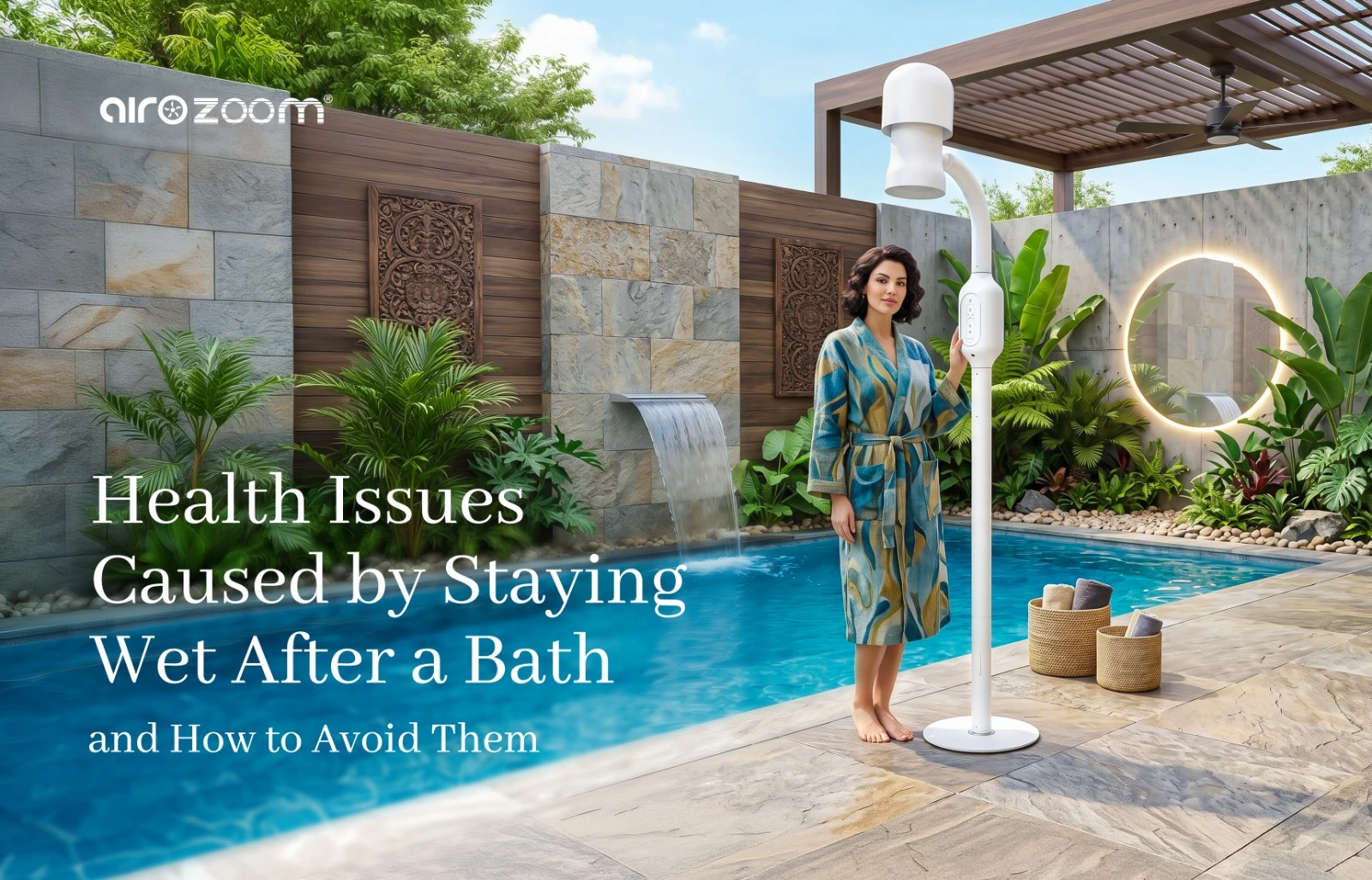
Airozoom’s full-body dryer is designed to make thorough drying easier. Its touch-free system uses warm, controlled airflow to dry the body without the need for a towel or handheld dryer. The unit accommodates users between 4 feet 5 inches and 6 feet 9 inches, allowing the airflow to be positioned according to individual height and comfort.
How Airozoom Supports a More Thorough Drying Routine
The main benefit is consistency. Rather than relying on several towel passes, users can step into the dryer and allow airflow to reach different areas of the body at the same time.
This can be particularly useful for areas that are easily missed during routine drying:
- Between the toes, where residual moisture can contribute to conditions such as athlete’s foot.
- Skin folds and the groin, where heat, moisture and friction can contribute to irritation and intertrigo.
- Under the arms, where moisture can remain after bathing.
- Other hard-to-reach areas, particularly for people who have difficulty bending, stretching or reaching.
Airozoom uses a patented airflow design intended to distribute air across the body rather than concentrating it in one area.
Less Rubbing for Easily Irritated Skin
Drying does not have to involve vigorous rubbing. For people with sensitive or eczema-prone skin, repeated friction can aggravate irritation.
A touch-free drying method removes the need to repeatedly rub the skin with a towel. The aim is simple: remove residual moisture while reducing unnecessary friction during the drying process.
This does not treat eczema or prevent flare-ups on its own, but it can provide an alternative to vigorous towel drying for people who find rubbing uncomfortable.
A Practical Option for Children and Families
Airozoom is also designed to make full-body drying easier for children, who may rush through the process or miss areas that are difficult to reach. Its hands-free format can make drying a more consistent part of the bathing routine.
The same principle applies across the household: making thorough drying easier can make it easier to do consistently.
When Drying Yourself Is Physically Difficult
For some people, thorough drying is less about habit and more about mobility. Bending down to dry the feet, reaching behind the body or carefully drying skin folds can be difficult for older adults and people with limited mobility.
A hands-free dryer removes some of these physical demands. Users do not need to repeatedly bend, twist or reach with a towel, making the process more practical in homes as well as settings where accessibility and ease of use matter.
That makes touch-free drying particularly relevant for older adults, people with mobility limitations and anyone who finds conventional towel drying difficult or tiring.
The Bigger Benefit: Making Thorough Drying Easier
Airozoom does not replace medical treatment for fungal infections, bacterial skin conditions or eczema. Its role is more practical: to make thorough, touch-free drying easier and more consistent after bathing or showering.
For individuals, that can mean less effort when drying hard-to-reach areas. In gyms, spas, hotels and other shared facilities, it can provide a convenient drying option that does not rely entirely on towels or individual handheld dryers.
In both settings, the goal is the same: make thorough drying a simpler part of the post-shower routine.
Frequently Asked Questions
How long is too long to stay wet after a shower?
There is no fixed time limit, but prolonged moisture, particularly in skin folds and between the toes, can increase the risk of irritation and some infections. Drying soon after bathing helps prevent moisture from remaining trapped against the skin.
Can staying wet cause skin infections?
Prolonged moisture can create a warm, damp environment that supports the growth of some fungi and bacteria. This is particularly relevant in areas where skin touches skin or where moisture is easily trapped. However, staying wet does not automatically cause an infection.
Is a touch-free full-body dryer better than a towel?
A touch-free dryer can make full-body drying more consistent and reduce the need for rubbing. It may also make hard-to-reach areas easier to dry. Whether it is better than a towel depends on individual needs, preferences and how thoroughly the towel is used.
Is Airozoom’s full-body dryer safe for elderly or disabled users?
Airozoom’s hands-free design can reduce the bending, reaching and physical effort involved in towel drying. Its adjustable height accommodates a range of users. However, individual mobility, balance and accessibility requirements should always be considered when choosing bathing and drying equipment.