Solving the Bathing Bottleneck in Nursing Homes & Assisted Living
Bathing can be a demanding part of a caregiver’s day, especially when a resident needs help with mobility, transfers, washing, or drying. Some residents need hands-on assistance throughout the process, while others need support with only certain tasks.
The time and effort involved can add up. Caregivers may need to help residents move safely, dry areas they cannot reach, and get ready after the shower. For residents with limited mobility, these steps can also mean relying on a caregiver for tasks they might otherwise prefer to do themselves.
This article looks at the physical demands of bathing assistance, the importance of supporting resident independence, and how touch-free drying can reduce some of the manual work involved in the post-bathing routine.
Why Bathing Assistance Is One of the Hardest Parts of a Caregiver’s Day
Bathing involves more than helping a resident wash. Depending on their needs, caregivers may assist with getting into the shower, maintaining a safe position, drying, and getting ready afterward. These tasks become more demanding when a resident has limited mobility or needs help with transfers.
- Hands-on assistance before, during, and after bathing: Some residents need help moving into the bathing area, maintaining their position, and getting ready after the shower.
- Supporting residents with limited mobility: Residents who have difficulty walking, standing, or transferring may need additional assistance during bathing.
- Drying hard-to-reach areas: Residents who cannot comfortably reach certain parts of their body may need help with drying. This can involve additional reaching or awkward positions for the caregiver.
- Moving residents safely after bathing: Transfers from shower chairs or other bathing equipment require careful handling, particularly when a resident has difficulty standing or supporting their own weight.
- Balancing bathing with other care responsibilities: Bathing is one part of a caregiver’s daily workload, so the time and physical effort involved need to fit alongside other care tasks.
The Hidden Physical Toll of Manual Towel Drying on Caregivers
Drying is another hands-on task at the end of a bath. When a resident needs help, a caregiver may need to bend, reach, or support the resident while drying areas they cannot reach themselves. When these movements are repeated throughout the day, they add to the physical demands of care. OSHA identifies repetition, force, bending, reaching, and other awkward postures as ergonomic risks in nursing home work.
- Repetitive bending and reaching: Drying a resident can involve repeated reaching, especially when helping with areas that are difficult for the resident to reach.
- Lifting, positioning, and supporting residents: Some residents need assistance with positioning or transfers before they can be dried safely. Resident lifting and repositioning are recognized sources of physical strain for nursing home caregivers.
- Time spent on manual towel drying: Drying adds another step to the bathing routine. Residents who need more assistance may also require more time and attention during this part of care.
- Staffing shortages and caregiver workload: When there is not enough staff or time to complete daily tasks, the workload can place additional pressure on care teams. Research among long-term care aides has linked perceptions of inadequate staffing and insufficient time with higher levels of burnout.
- How physical demands can contribute to staff burnout and turnover: Physical demands are only one part of a caregiver’s workload. They exist alongside staffing pressures, fatigue, and the many other responsibilities involved in resident care. Research has linked burnout and fatigue with turnover intention among long-term care staff.
Why Independence During Bathing Matters for Resident Well-being
Bathing is a personal part of the daily routine, so residents should have as much privacy, choice, and involvement as their abilities and care needs allow. Some residents may be able to manage parts of bathing themselves, while others need more hands-on support. The goal is to support what each resident can safely do without taking away the assistance they need.
- Maintaining privacy and dignity: Bathing involves personal care and exposure of the body. Providing appropriate privacy and involving residents in the process helps protect their dignity.
- Giving residents more control over their daily routine: Person-centered care includes respecting residents’ choices and preferences. Where possible, residents should have a say in how their bathing routine is carried out.
- Supporting independence where physically possible: Residents who are able to manage part of their bathing routine should be given the opportunity to do so. Research has found that bathing skills training can improve independence and satisfaction among older adults living in nursing homes.
- Reducing unnecessary hands-on assistance: Caregivers can provide support or supervision when appropriate instead of taking over tasks a resident is able to perform safely. Research has found that nursing staff sometimes take over daily activities that residents could participate in themselves, suggesting that appropriate support and supervision can promote resident independence.
- Independence should complement, not replace, caregiver support: Supporting independence does not mean expecting residents to manage bathing alone. Residents may still need help with transfers, balance, drying, or other parts of the routine. Caregivers should provide the assistance required to keep bathing safe and appropriate for each resident.
The Fall Risk Nobody Talks About: Bathing in Licensed Care Facilities
The shower may be over, but safety still matters once bathing is finished. A resident may still need to dry off, transfer from a shower seat or wheelchair, and move away from the bathing area. Wet floors and mobility challenges can make these steps more difficult and increase the need for appropriate support.
- Wet bathroom floors: Water left on the floor creates a slippery surface. Keeping the bathing area as dry as possible reduces one of the environmental hazards associated with falls.
- Water left on the body after bathing: Residents may carry water with them when they leave the shower area. Drying before moving away from the bathing space limits the amount of moisture carried onto surrounding floors.
- Bending and reaching for towels: Drying a resident may require a caregiver to bend or reach while helping with areas the resident cannot reach. These movements add to the physical demands of post-bathing care.
- Transfers from shower seats or wheelchairs: Moving a resident between a shower seat, wheelchair, or other equipment requires appropriate support based on their mobility and transfer needs. Safe transfers are an important part of fall prevention in long-term care.
- Mobility aids on wet surfaces: Walkers, wheelchairs, and other mobility aids need to be used carefully around wet areas. A slippery surface can make movement and transfers more challenging.
- Why the period immediately after bathing deserves attention: Once bathing is finished, the resident may still need help with drying, transferring, dressing, or moving to another area. A clear floor, controlled moisture, and appropriate assistance all contribute to a safer transition.
Where Traditional Drying Methods Fall Short
Towels are familiar and practical, but drying can become another hands-on task when a resident needs assistance. A caregiver may need to reach areas the resident cannot comfortably reach or provide support while they dry. In a care setting, this adds another step to the post-bathing routine.
Towel drying also means handling and laundering towels after use. In facilities where bathing takes place throughout the day, reducing towel use simplifies part of the post-bathing routine. Airozoom’s Body Dryer System is designed as a touch-free alternative to conventional drying, using automatic airflow instead of a towel.
For residents who can safely use a body dryer with the appropriate level of support, touch-free drying offers an alternative to towel drying. This approach gives residents who need to remain seated another option after bathing.
A Touch-Free Approach That Works for Staff and Residents Alike
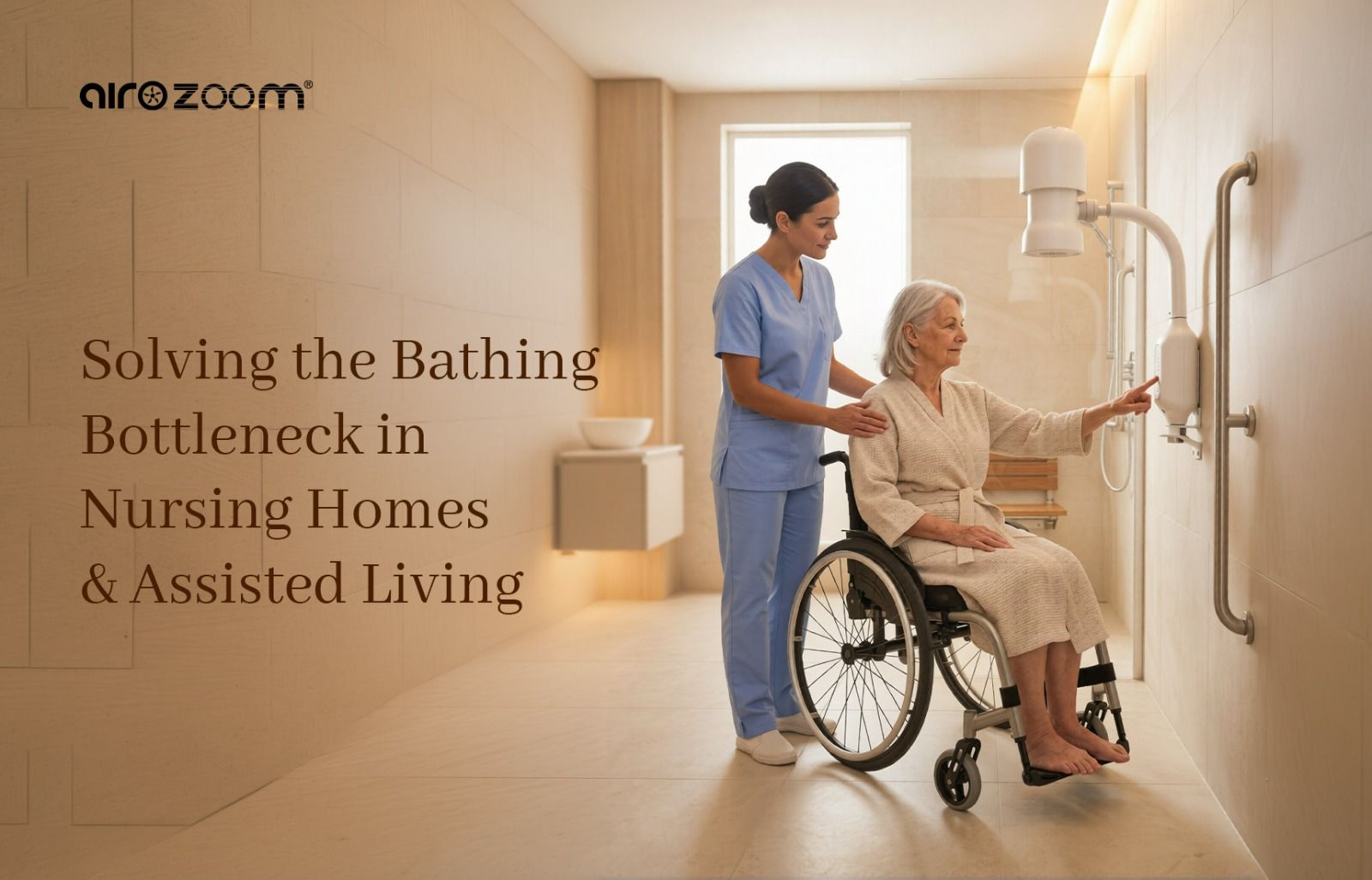
A touch-free body dryer offers a different approach to the final part of bathing. The resident can dry using airflow while remaining in position, rather than relying entirely on a towel. For care staff, this changes how the final drying step is handled.
- Less manual towel drying: Airozoom uses automatic airflow to dry the body without relying on a towel. This offers an alternative when a resident needs help drying areas they cannot comfortably reach themselves.
- Hands-free operation: The system operates without the user needing to hold a dryer or towel while drying.
- Seated drying for residents with limited mobility: Airozoom’s system can also be adjusted for seated use, which may suit residents who cannot comfortably remain standing. Use should still be based on the resident’s individual abilities, care plan, and safety needs.
- Reduced bending and reaching: With airflow directed across the body, there is less need to work around the resident with a towel to reach different areas. This is particularly relevant in care settings where bending and reaching are already part of physically demanding resident care.
- Support for greater resident independence: For residents who can safely participate in their own drying, a hands-free system gives them more involvement in the routine. It does not replace caregiver assistance when a resident needs it.
- Less towel handling for care staff: Using airflow instead of towels reduces the amount of towel handling involved in the drying process.
Frequently Asked Questions
Why is bathing assistance physically demanding for caregivers?
Bathing may involve helping residents with transfers, positioning, washing, drying, and getting dressed afterward. Residents with limited mobility may need more hands-on assistance, which can involve repeated bending, reaching, lifting, or repositioning.
Can touch-free drying reduce fall risk in long-term care facilities?
Touch-free drying may reduce some of the practical challenges around post-bathing drying, such as water being carried away from the bathing area or the need to handle towels while assisting a resident. However, a body dryer is not a fall prevention device. Safe transfers, appropriate supervision, and other fall prevention measures remain important.
Is a full-body dryer suitable for residents with limited mobility?
It may be suitable for some residents with limited mobility, depending on their individual abilities and care needs. A dryer that supports seated use gives residents who cannot comfortably stand another option for drying after bathing.
Who benefits most from touch-free drying in assisted living settings?
Touch-free drying may be particularly useful for residents who have difficulty standing for long periods, reaching certain areas of their body, or holding a towel while drying. For residents who can participate safely, it also provides an opportunity to take part in their post-bathing routine.
Can Airozoom’s full-body dryer be used for seated residents?
Yes. Airozoom’s Body Dryer System is designed to accommodate seated drying. This makes it an option for residents who need to remain seated after bathing, based on their individual abilities, care plan, and safety needs.